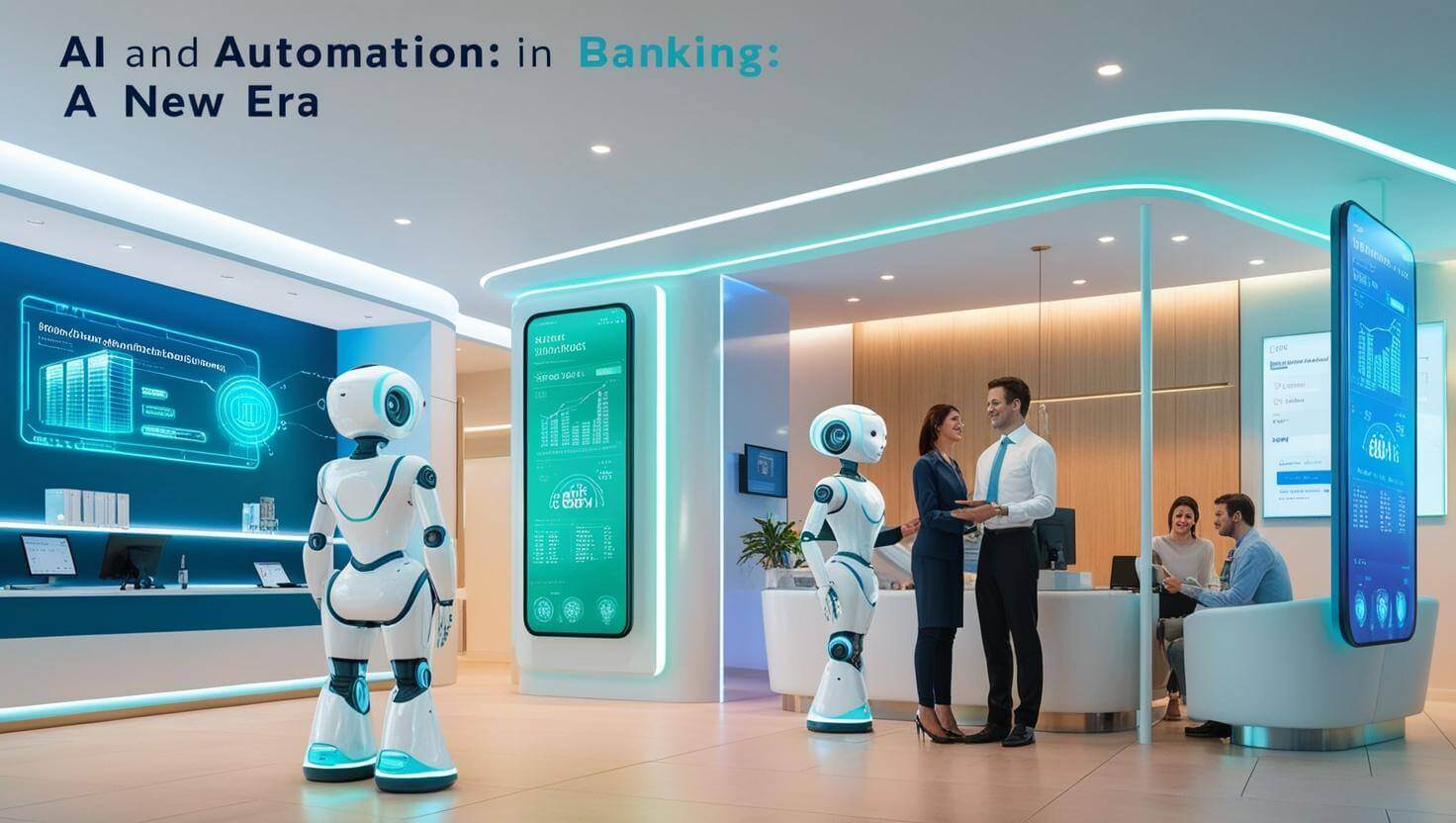
Banking has always been an information business. What has changed is the volume and speed of that information. Artificial intelligence and automation help banks turn data into timely decisions while freeing staff from repetitive work.
Better service for customers
Customers expect answers at any hour. AI-powered assistants can handle routine queries such as balances, card blocking and service requests, and hand over complex cases to people. Personalised alerts can remind customers about due dates or unusual spending before it becomes a problem.
Smarter risk management
Machine learning models can combine many signals to support credit assessment, flag early warning signs in loan accounts, and detect unusual transaction patterns in real time. Used well, they help bankers focus attention where it is most needed.
Automation behind the counter
A large part of banking work is process: verifying documents, preparing reports, reconciling entries and meeting compliance requirements. Robotic process automation and simple scripts can take over many of these steps, reducing errors and turnaround time.
Financial inclusion
Digital onboarding, vernacular-language interfaces and alternative data for credit scoring can bring more people into the formal banking system, particularly in semi-urban and rural areas.
What must not be forgotten
- Fairness. Models trained on biased data can make biased decisions. They need regular review.
- Explainability. Customers and regulators deserve to know why a decision was made.
- Data protection. Customer data must be handled with consent and strong security.
- The human touch. Technology should make bankers more available to customers, not less.
The banks that benefit most will be those that treat AI as a way to support their people, not simply as a cost-cutting tool.